
LLM SEO: how to optimize content so ChatGPT, Claude and Gemini cite it
LLM SEO means building for the crawlers, retrieval behavior and citation habits of ChatGPT, Claude, Gemini and Perplexity — not one universal ranking algorithm. Here's the technical checklist.
On this page
"LLM SEO" gets pitched as if it's one thing to optimize for, the way classic SEO was mostly one thing (Google). It isn't. ChatGPT, Claude, Gemini and Perplexity are four separate products with four separate crawlers, four separate retrieval pipelines, and — most importantly — four different habits for what they choose to cite. Optimizing for "LLMs" in the abstract means nothing until you break it down by engine.
Key takeaways
- There is no single "LLM algorithm" to optimize for — ChatGPT, Claude, Gemini and Perplexity each run their own crawler, retrieval logic and citation behavior, and a page that's invisible to one can still be cited by another.
- Each engine crawls with a named bot (OAI-SearchBot, ChatGPT-User, ClaudeBot, PerplexityBot, Google-Extended, Applebot-Extended) — robots.txt rules that block one but not another silently cut a model out of your citations without any error or warning.
- An llms.txt file at your site root won't force a citation, but it gives models a clean, low-noise map of your most important pages when they do decide to fetch it.
- Model behavior differs in ways that change what you write: ChatGPT favors structured, tabular answers; Claude tends to cite multiple sources and viewpoints per answer rather than a single winner; Gemini leans heavily on Google's own index, so classic technical SEO still gates whether it sees you at all.
Start with what each model can actually see
Before anything about writing style or structure matters, a model has to be able to crawl and fetch your pages at all. Each major AI product identifies itself with its own user agent, and a robots.txt rule written to block "AI bots" broadly — or copied from a template without checking which bots it actually names — routinely blocks some engines while leaving others untouched.
| Engine | Crawler user agent | What it's used for |
|---|---|---|
| ChatGPT (OpenAI) | OAI-SearchBot, ChatGPT-User, GPTBot | Search indexing, live browsing during a chat, and model training respectively — these are separate bots with separate purposes |
| Claude (Anthropic) | ClaudeBot | Crawls for both search-style retrieval and training; blocking it removes your site from Claude's live citations |
| Perplexity | PerplexityBot | Real-time retrieval for its answer engine — this is the bot that directly determines whether Perplexity can cite you |
| Gemini (Google) | Google-Extended | Controls whether Google's AI features (Gemini, AI Overviews) can use your content, separate from classic Googlebot indexing |
| Apple Intelligence | Applebot-Extended | Controls use of your content in Apple's AI-powered search and Siri features |
The crawler bots behind the major AI engines, and what blocking them costs you.
The practical audit is simple but frequently skipped: pull your live robots.txt and check it line by line against this list. A rule like "Disallow: /" under a wildcard AI user-agent block, added defensively months ago, can silently zero out citations from an engine you never meant to exclude.
Give models a clean map with llms.txt
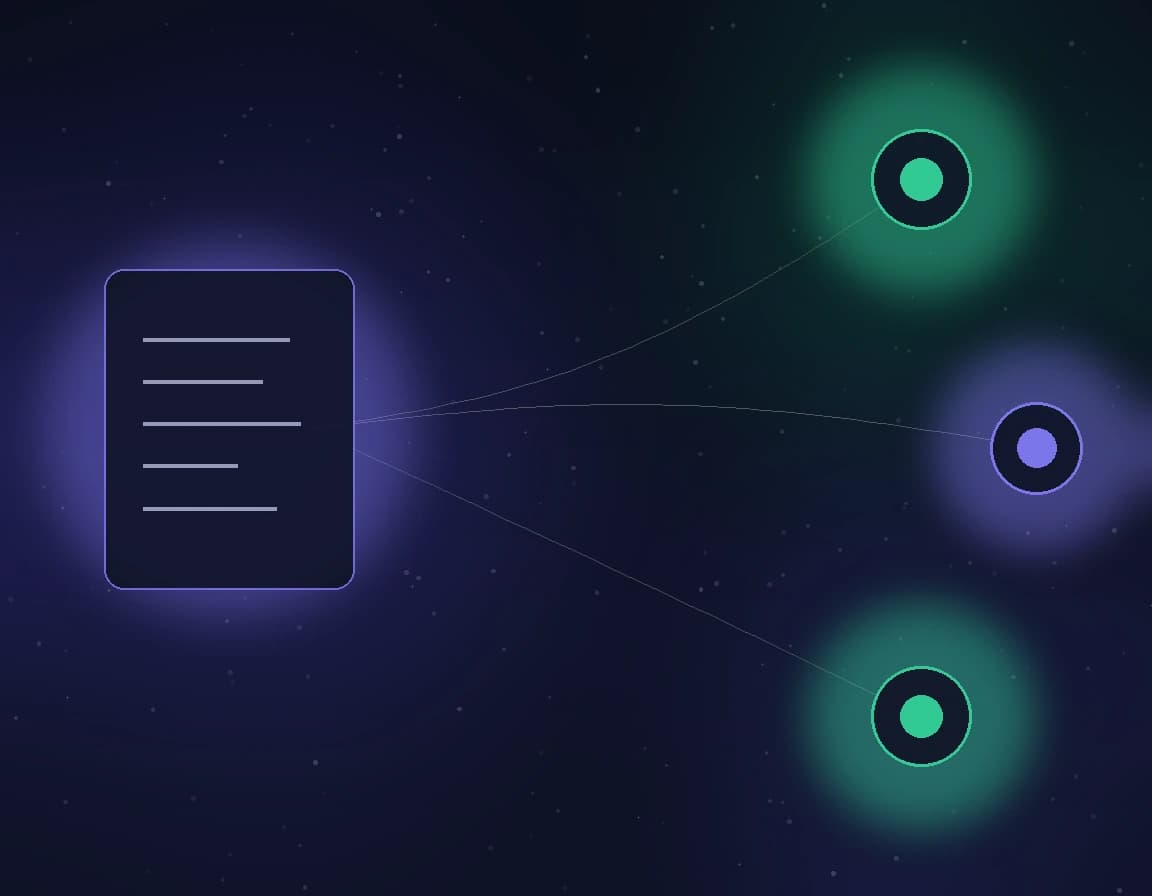
llms.txt is an emerging (not yet universally adopted) convention: a plain markdown file at your site root listing your most important pages with short, direct descriptions — the AI-era equivalent of a sitemap written for a model rather than a crawler. No major AI engine has confirmed it's required for citation, and it won't rescue a page that's otherwise thin or hard to parse. What it does is remove ambiguity when a model's retrieval step does look at your site: instead of inferring structure from navigation and internal links, it gets a direct, low-noise list of what matters and why. Treat it as a low-cost addition, not a substitute for the content quality work below.
Write differently for how each model actually cites
Once a model can crawl and fetch your content, what it does with that content at answer time still varies by engine, and that should change how you write:
- ChatGPT tends to favor content it can lift into a structured answer — direct definitions, comparison tables, numbered steps — over long unstructured narrative paragraphs.
- Claude's answers more often cite multiple sources and present competing viewpoints rather than committing to a single "best" answer, so content that fairly represents trade-offs (not just sells its own conclusion) tends to fit its citation pattern.
- Gemini leans heavily on Google's own web index for grounding, which means classic technical SEO — crawlability, indexation, page experience — is a harder gate for Gemini visibility than it is for the others.
- Perplexity's answers are retrieval-heavy and recency-sensitive; it tends to reach for pages with current dates and specific, checkable facts over evergreen general overviews.
“The traits that make content citable — direct answers, real specifics, clear structure — hold across every engine. What changes is which of those traits each model weighs most heavily when it's choosing what to quote.”
The LLM SEO technical checklist
In rough priority order — fix crawlability before worrying about writing style, since a blocked page never gets a chance to be judged on either:
- Audit robots.txt against the actual named bots (OAI-SearchBot, ChatGPT-User, ClaudeBot, PerplexityBot, Google-Extended, Applebot-Extended) — don't rely on a generic "AI" wildcard rule.
- Add an llms.txt at your site root listing your highest-value pages with short, direct one-line descriptions.
- Confirm your most important pages return a real HTTP 200 to each bot's user agent, not a bot-detection challenge or a JS-only render those crawlers can't execute.
- Rewrite key pages so the direct answer sits in the first two sentences, with supporting specifics (numbers, dates, named sources) below — every engine rewards this, none penalize it.
- Add FAQ and Article schema so structure is unambiguous to a crawler regardless of which retrieval pipeline reads it.
- Track referral traffic from chatgpt.com, claude.ai, perplexity.ai and gemini.google.com in analytics, and check Bing Webmaster Tools' AI Performance report, since it's currently the only major first-party citation report available.
How long it actually takes
Fixing crawler access is close to immediate — the next time each bot revisits, it can see what it couldn't before. Early citation lifts from structural and content fixes typically show up within 60-90 days as engines re-crawl and re-evaluate updated pages. The compounding effect — where a domain builds enough topically-focused, consistently citable content that it becomes a default source engines reach for — tends to take 6-9 months of sustained publishing, closely mirroring how long it takes to build topical authority in classic Google SEO.
Related reading
Frequently asked questions
Is LLM SEO different from GEO or AEO?
They overlap heavily and the terms are often used interchangeably. GEO (Generative Engine Optimization) and AEO (Answer Engine Optimization) describe the broader discipline of optimizing for AI-generated answers; "LLM SEO" is usually used more narrowly for the technical work of making sure large language models specifically — ChatGPT, Claude, Gemini — can crawl, parse and cite your content.
Does blocking GPTBot in robots.txt hurt my SEO?
It doesn't affect classic Google search rankings, but it does remove your content from being used in ChatGPT's citations and, depending on the bot blocked, its training data. OAI-SearchBot and ChatGPT-User specifically affect what ChatGPT can retrieve and cite live — blocking those is a direct trade-off against LLM visibility, separate from any training-data concerns GPTBot raises.
Do I need a separate llms.txt for every page, or one file?
One file at your site root (yoursite.com/llms.txt), similar to robots.txt or sitemap.xml. It should list your most important pages with short descriptions, not attempt to catalog your entire site — treat it as a curated map, not a full sitemap duplicate.